
How do you use the Gate.io withdrawal address book? Save addresses, label them and verify before sending
Editorial Note
Last reviewed: 3/19/2026
This page is maintained by the Gate Register - Third-Party Gate.io Beginner Guide editorial team and cross-checked against platform rules, product docs and internal topic pages.
If platform rules change, treat the official documentation as the final source of truth.
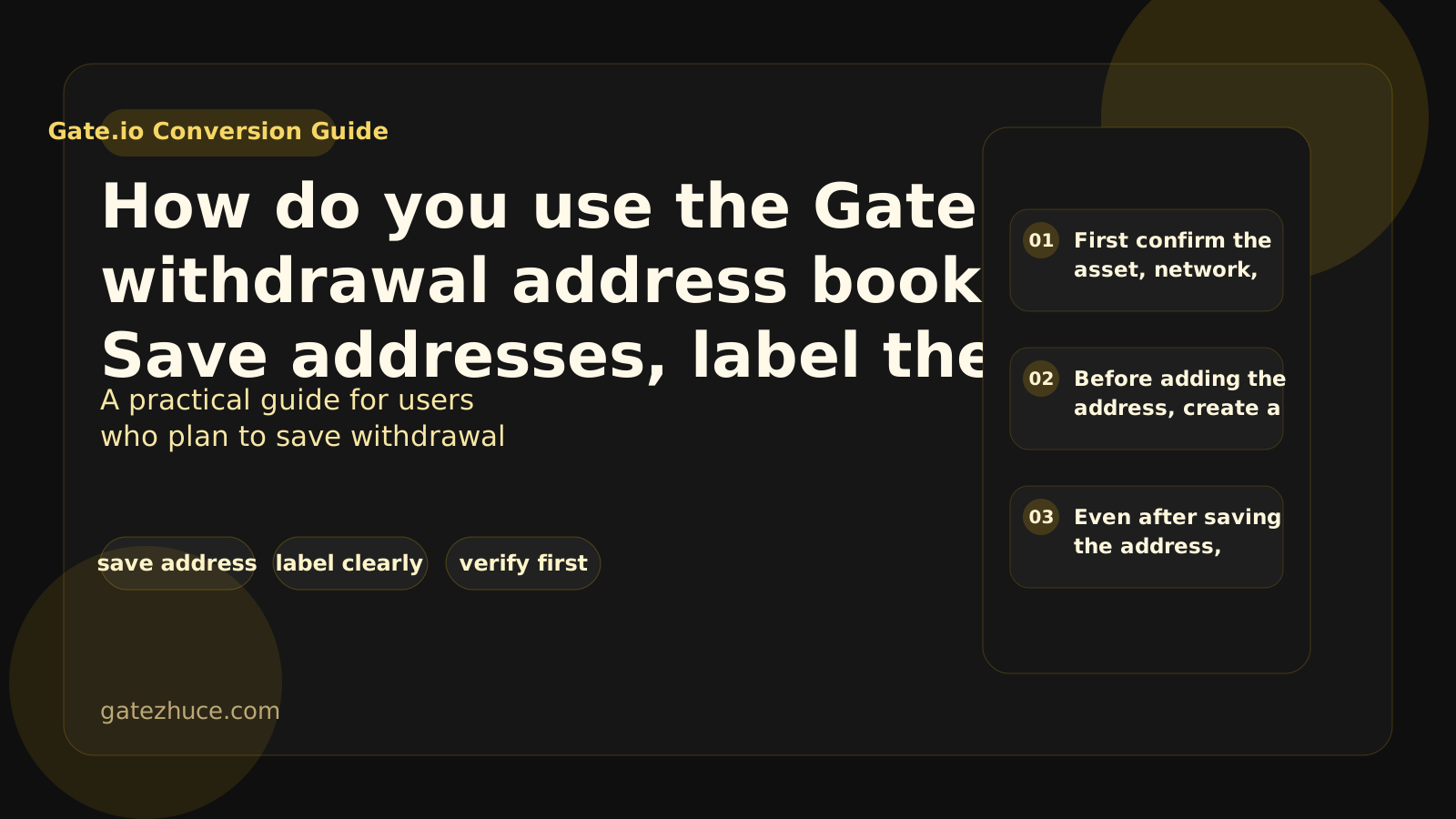
An address book is not just about speed. Its real value is reducing repeated copy-paste mistakes, but only if network, tag and ownership are clear from the start.
Who this guide is for
- Best for users who withdraw often or want to save an address for the first time
- The address book reduces repetition but does not replace network checks
- Clear naming matters more than saving a large number of entries
Suggested path
- First confirm the asset, network, memo or tag need and whether the destination platform or wallet is a stable long-term receiver.
- Before adding the address, create a label that clearly shows the platform, network and ownership so you can identify it later without guessing.
- Even after saving the address, recheck the first and last characters, network, tag requirement, whitelist status and minimum amount before the first withdrawal.
- If the destination use changes, the platform pauses the network or you no longer trust the receiver, update or remove the old saved address.
Key checks
- save address
- label clearly
- verify first
FAQ
Can the address book replace manual verification every time?
No. It reduces typing mistakes, but the network, tag and live status still need to be checked each time.
Why does the label matter so much?
Because one platform may support several networks or accounts, and unclear labels make mix-ups more likely.
When should I delete an old saved address?
When the use case changes, the platform changes its rules, the network is no longer active or you stop using that receiver.
Next move
Once you enter Gate.io, use the live platform page as the final source for fees, eligibility and campaign rules.
Site Role
Site role: move new users through day-one setup
These sites focus on signup, app download, KYC and the first operational steps rather than broad glossary coverage.
- Remove friction around signup, app download, verification and first-use setup.
- Show the next action after account opening so traffic does not stall.
- Best for visitors who are ready to open an account now.